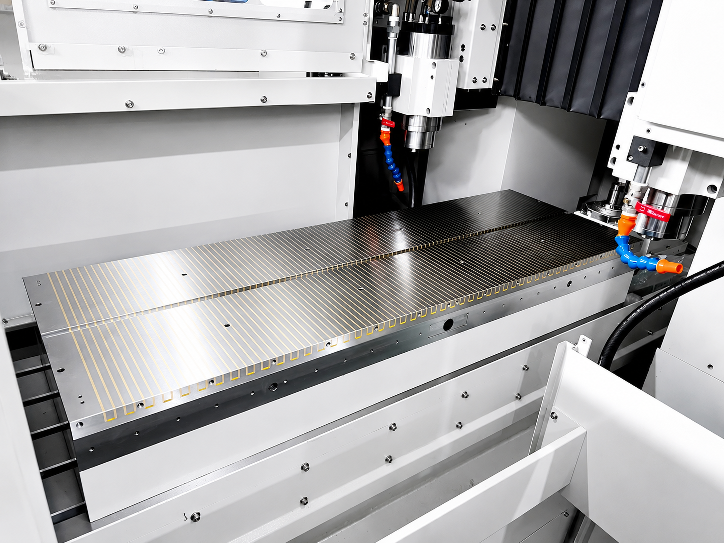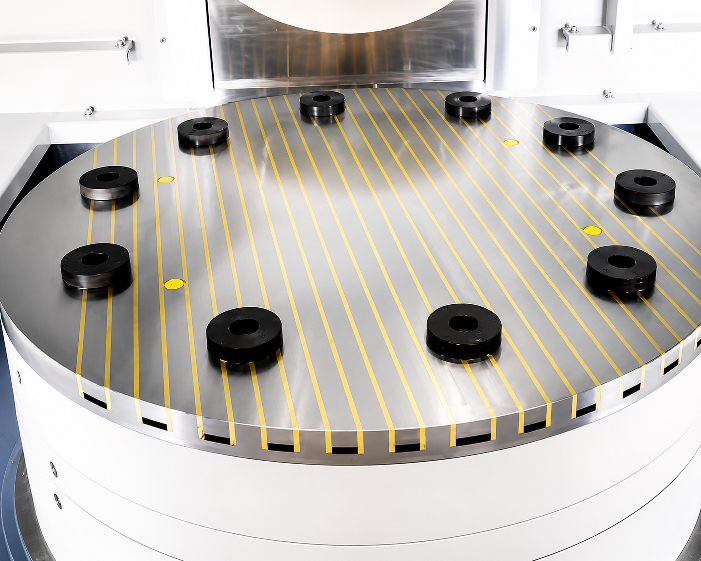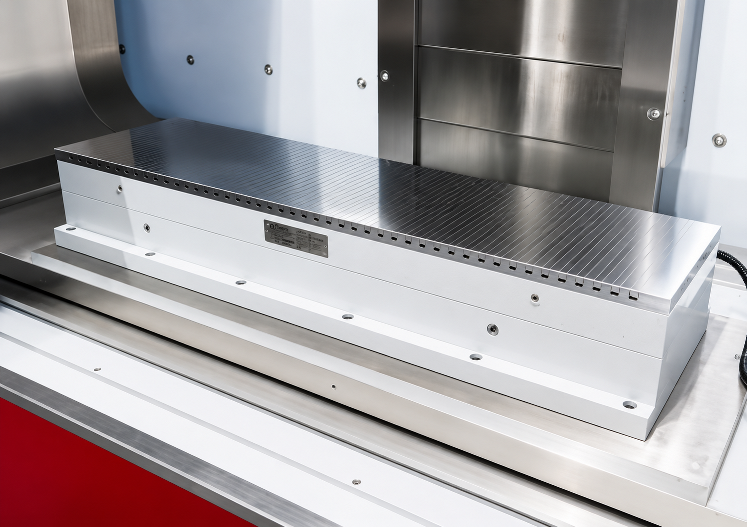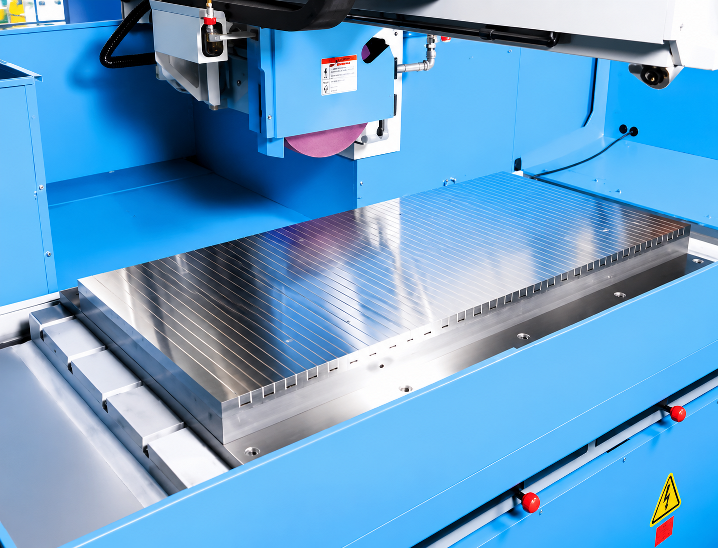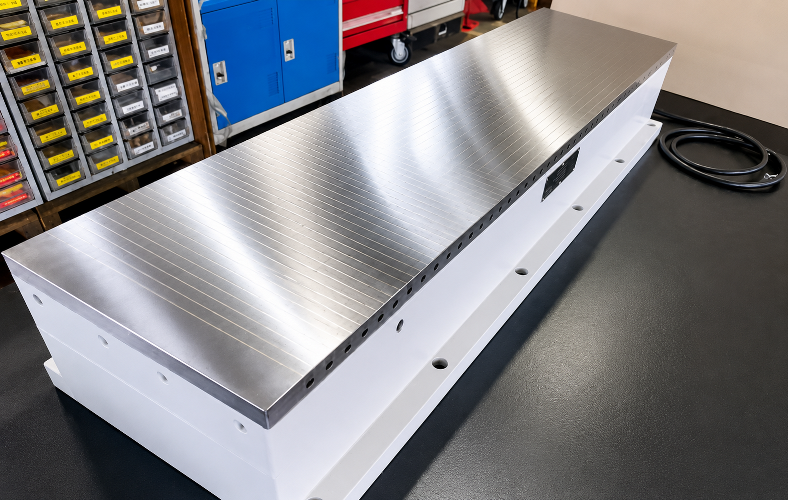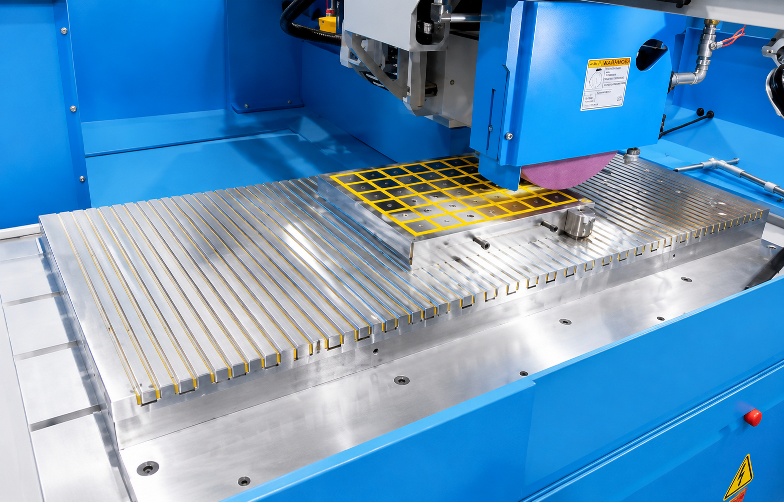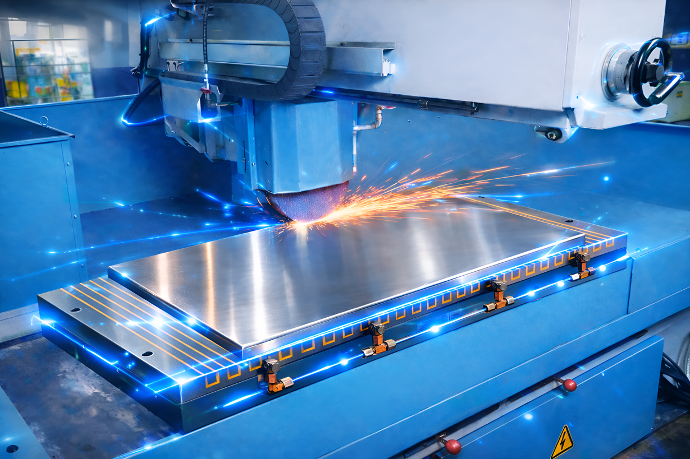
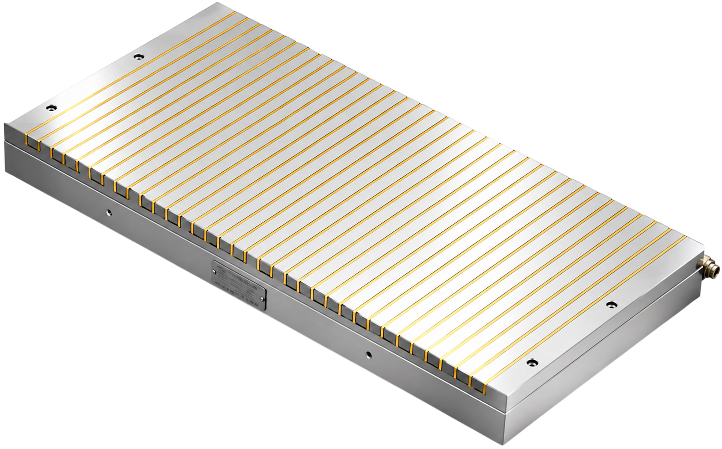
With the continuous advancement of precision manufacturing technologies, high-precision surface grinding has become an indispensable core process in industries such as mold manufacturing, semiconductor equipment components, aerospace parts, and high-end mechanical machining. The quality of grinding depends not only on the rigidity of the machine and the performance of the grinding wheel, but also closely on the workpiece clamping method. If clamping is unstable, even the most precise equipment cannot achieve micron-level machining requirements. Against this backdrop, the permanent electro-magnetic chuck—integrating permanent magnetic force with electronic control switching technology—demonstrates significant and comprehensive advantages in high-precision surface grinding applications.
From the perspective of mechanical stability, the permanent electro-magnetic chuck provides a uniform and comprehensive magnetic holding method. Traditional mechanical clamps or vise-type fixtures typically secure workpieces using localized point pressure, which can lead to stress concentration or slight deformation during grinding—especially for thin plates or high-precision components. In contrast, the permanent electro-magnetic chuck distributes magnetic poles evenly, allowing magnetic force to act uniformly across the entire contact surface. This ensures the workpiece adheres closely to the chuck surface, reducing the risk of warping and deformation. Such uniform force distribution is crucial for maintaining flatness and parallelism.
Thermal stability is another critical factor in high-precision grinding. Conventional electromagnetic chucks require continuous power supply to maintain magnetic force. Prolonged operation can cause coil heating, leading to thermal expansion and dimensional variation of the chuck. In micron-level machining environments, even minimal temperature increases can affect final accuracy. Permanent electro-magnetic chucks, however, require power only during magnetization and demagnetization. Once magnetized, they consume no additional power and generate no continuous heat source. This “zero continuous heat generation” characteristic effectively prevents machining errors caused by thermal deformation, allowing the chuck to maintain dimensional stability during extended grinding operations—an essential requirement for ultra-precision components.
In terms of productivity and operational convenience, permanent electro-magnetic chucks also offer significant benefits. Their rapid magnetization and demagnetization design simplifies clamping and removal processes, greatly reducing setup and changeover time. Compared with traditional mechanical fixtures, there is no need to repeatedly adjust clamps or tighten screws, nor to recalibrate due to positioning errors. This fast and highly repeatable clamping method is especially suitable for integration into modern automated production lines, improving overall productivity and machining consistency.
When machining thin plates or small components, permanent electro-magnetic chucks demonstrate unique value. Because the clamping method relies on evenly distributed magnetic force rather than mechanical pressure, it avoids surface damage and bending deformation commonly caused by traditional pressing methods. For extremely thin or irregularly shaped workpieces, this non-contact pressure distribution significantly enhances machining stability and yield rate.
Safety and energy efficiency are additional advantages that cannot be overlooked. After magnetization, permanent electro-magnetic chucks maintain holding force even if external power is interrupted, preventing workpiece detachment in the event of sudden power failure and enhancing operational safety. Furthermore, since no continuous power supply is required, energy consumption is relatively low, reducing electricity costs and equipment load. For grinding machines operating over long periods, this energy-saving feature not only aligns with modern manufacturing demands for sustainability and efficiency but also reduces maintenance frequency and operating costs.