In the mold machining industry, “efficiency” and “precision” have always been at the core of competitiveness. As product designs become increasingly complex, lead times continue to shrink, and high-mix, low-volume production becomes the norm, traditional machining methods are gradually revealing their limitations. Among these factors, the selection and use of workholding fixtures play a critical role in determining machining cycle time, workpiece quality, and overall production line efficiency. In recent years, magnetic workholding fixtures have been increasingly adopted in mold machining, particularly demonstrating significant advantages in five-sided machining, making them an important solution for improving both efficiency and precision.
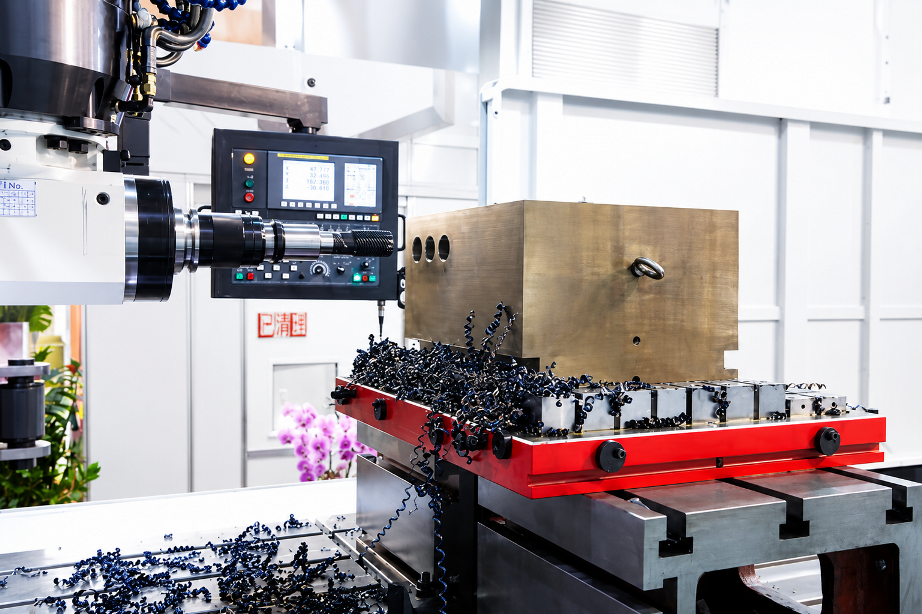
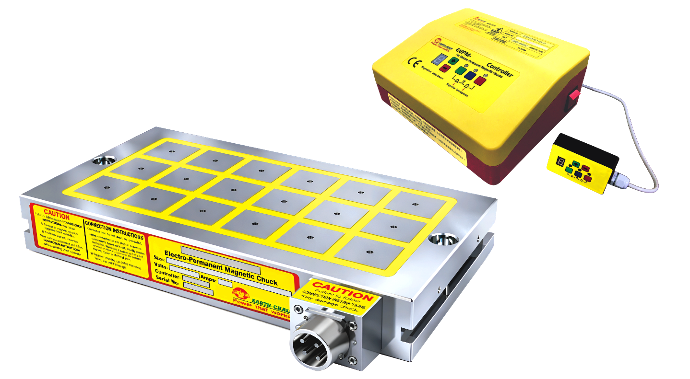
From a process perspective, traditional mechanical fixtures typically rely on bolts, clamps, and plates to secure workpieces. These methods not only require longer setup times but also involve repeated disassembly and reassembly when changing parts, leading to a high proportion of non-cutting time. In contrast, magnetic workholding fixtures feature “rapid magnetization and demagnetization,” allowing operators to secure or release workpieces quickly through a control system, significantly reducing setup time. This characteristic is especially beneficial in applications requiring frequent mold changes or multi-part switching, effectively improving overall production throughput.
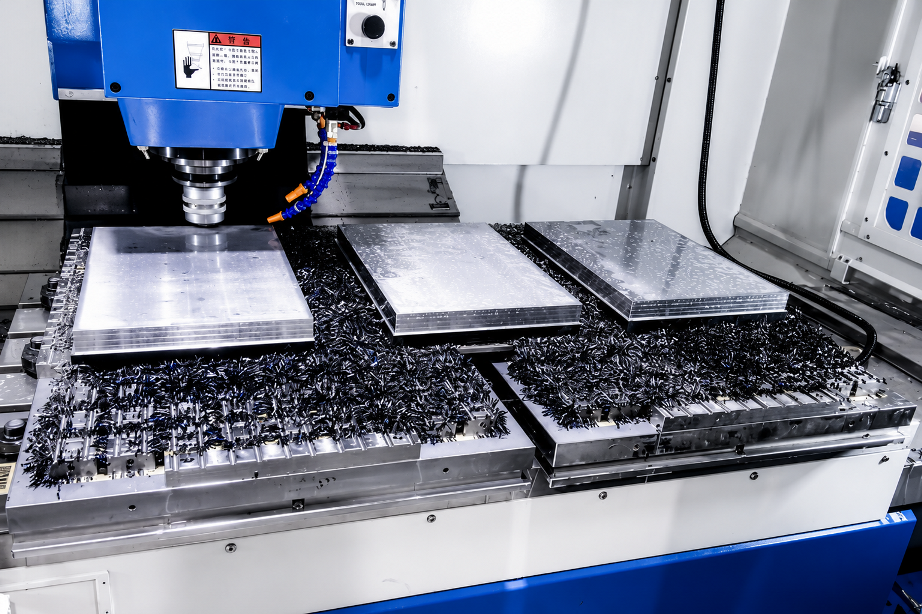
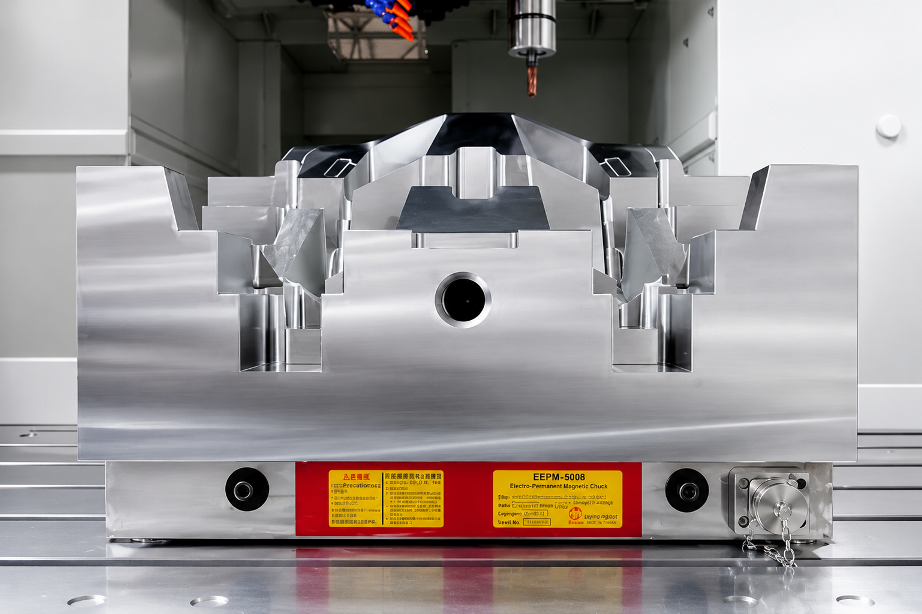
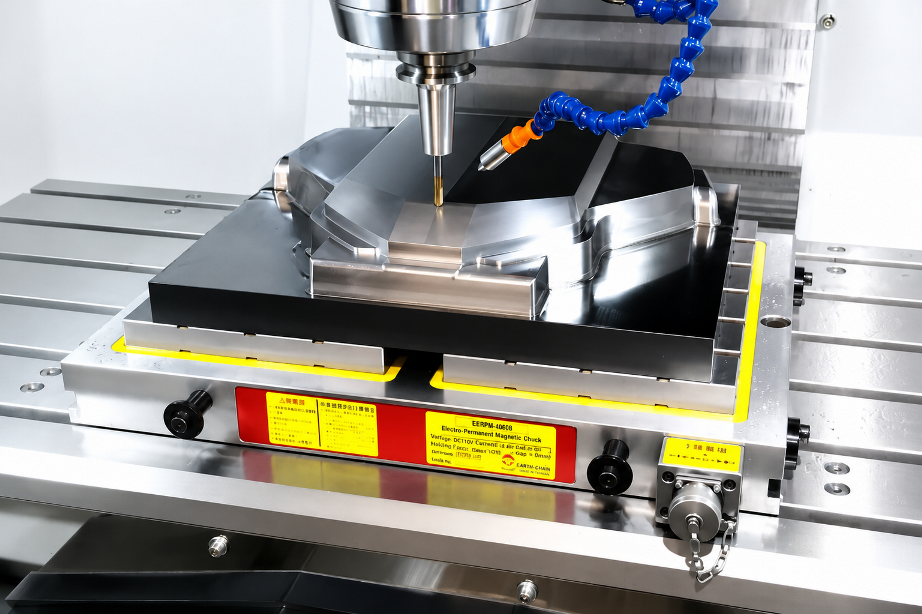
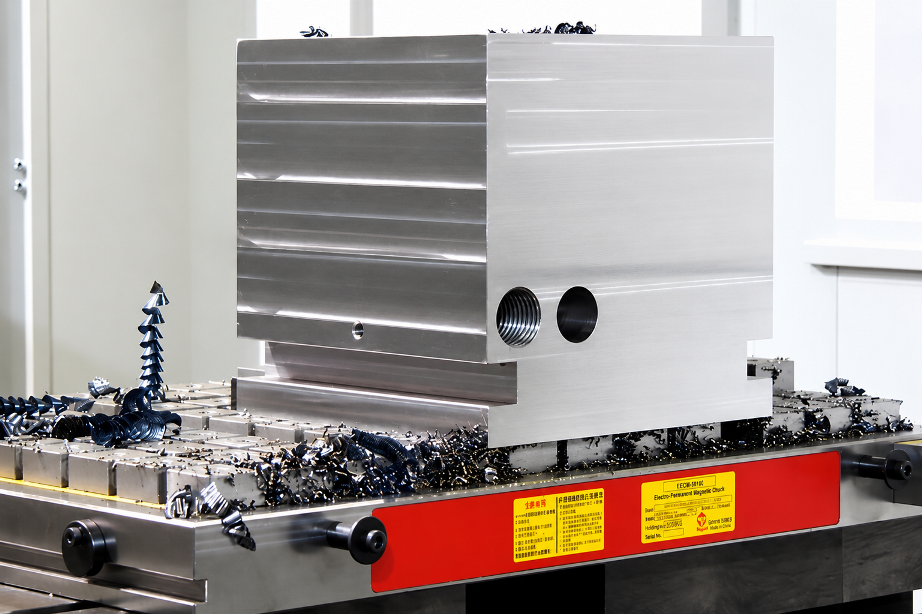
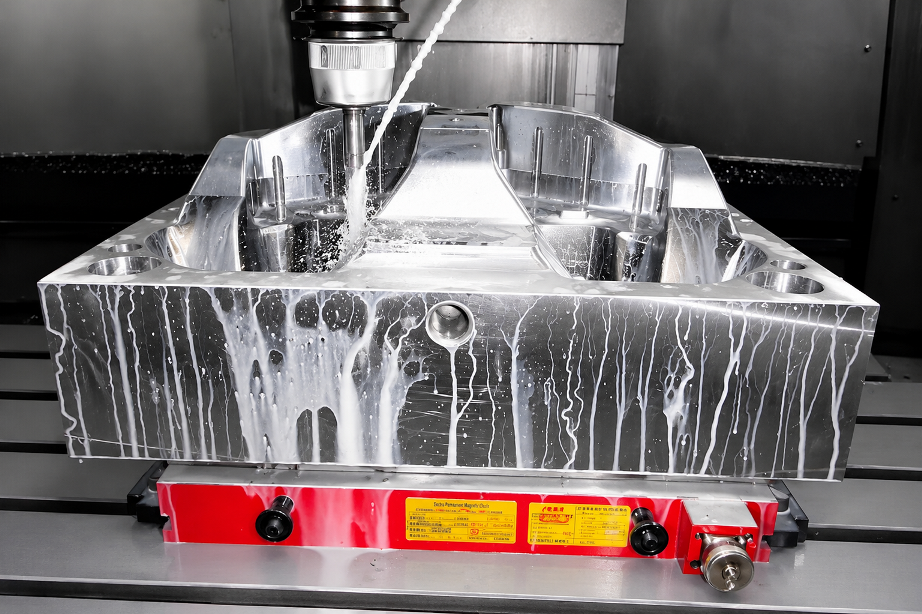
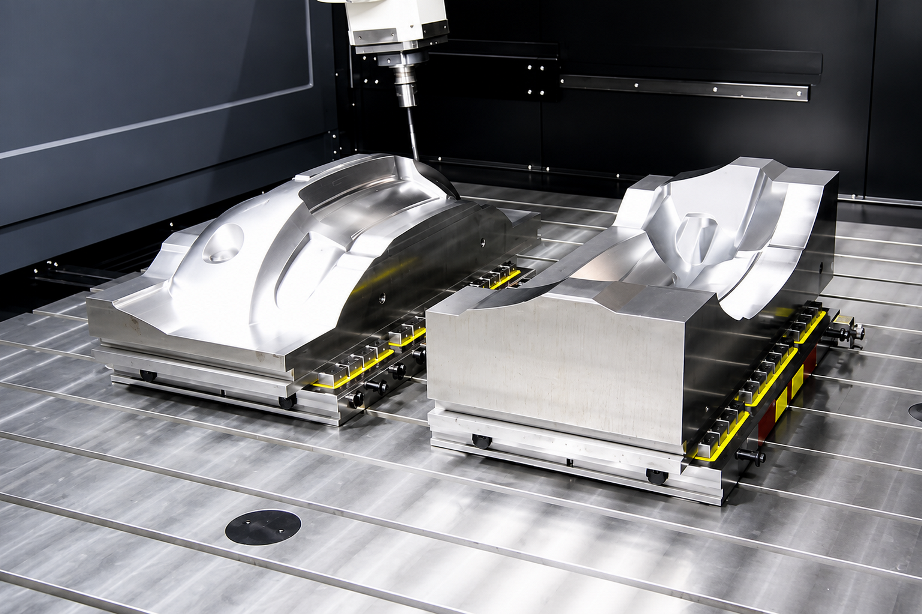
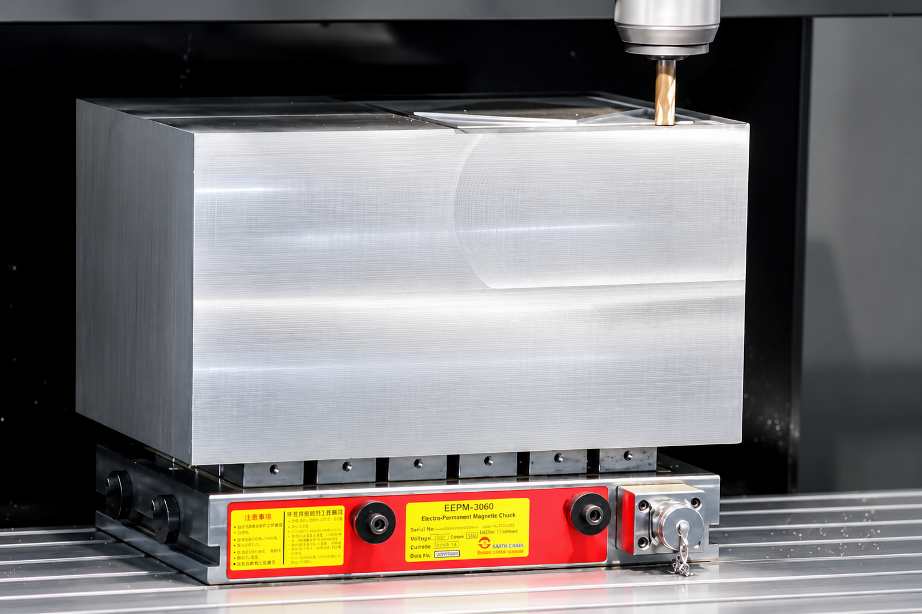
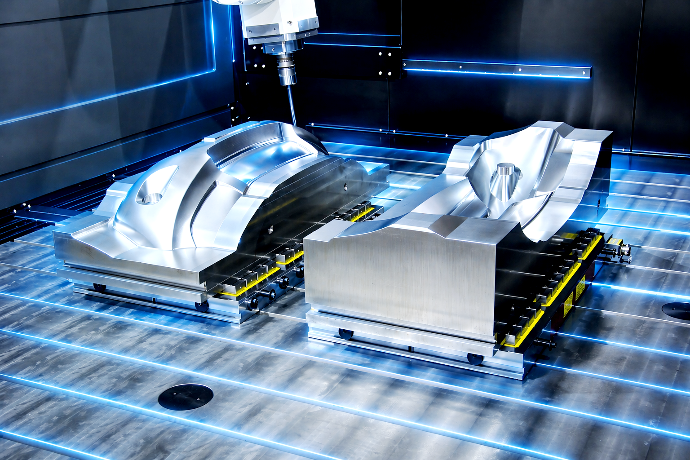
Furthermore, in five-sided machining applications, magnetic workholding significantly reduces workpiece interference. Traditional fixtures often occupy space around the workpiece—such as clamps, vises, or side supports—which can limit tool access angles and may require multiple re-clamping operations to complete all machining surfaces. Each re-clamping step increases time costs and introduces cumulative positioning errors, ultimately affecting final accuracy. Magnetic fixtures, however, utilize a flat surface holding method to securely fix the workpiece onto the machining table without occupying side space, allowing cutting tools to access five faces freely. This capability of completing multi-face machining in a single setup is a key factor in improving efficiency.
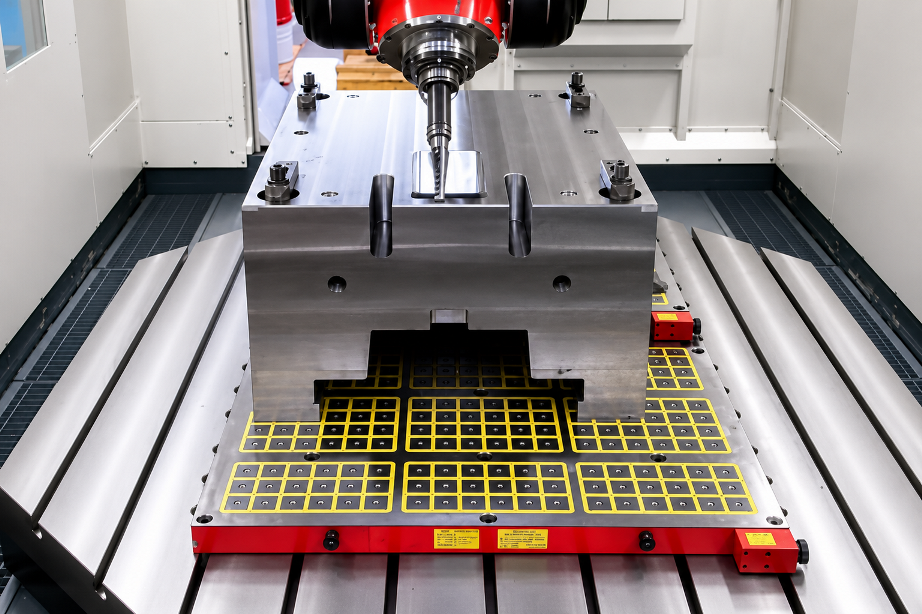
In addition, magnetic clamping provides uniform and stable force distribution, which enhances machining precision. Traditional mechanical clamping often involves point or line contact, leading to localized stress concentration. This is particularly problematic for thin or complex-shaped mold workpieces, where deformation or vibration may occur, negatively impacting machining quality. Magnetic fixtures distribute clamping force evenly across the entire contact surface through a magnetic field, reducing the risk of deformation. At the same time, the stability of the clamping force helps suppress vibration during cutting, improving surface finish and dimensional accuracy.
From a thermal perspective, magnetic workholding also offers clear advantages. Conventional electromagnetic chucks require continuous power to maintain magnetic force, which can generate heat over time and affect workpiece temperature. In high-precision mold machining, even slight temperature variations can lead to dimensional errors or thermal deformation. Modern permanent magnetic or electro-permanent magnetic fixtures, however, maintain clamping force without continuous power after magnetization, generating virtually no additional heat. This eliminates the risk of temperature-induced deformation and is highly valuable for applications requiring high precision and stability.
Moreover, magnetic workholding systems provide advantages in safety and automation integration. Their clamping status can be monitored and controlled through systems, allowing seamless integration with CNC machines and automated production lines for unmanned or minimally staffed operations. The rapid magnetization and demagnetization capability also enables efficient coordination with robotic arms for automated loading and unloading, further enhancing overall productivity. With well-designed systems, magnetic clamping offers stability and predictability, effectively reducing the risk of clamping failure.
In summary, the application of magnetic workholding in five-sided mold machining enhances both efficiency and quality from multiple perspectives. Its rapid magnetization and demagnetization shorten setup times; its flat surface holding reduces workpiece interference and enables smoother five-sided machining; its uniform clamping force improves stability and precision; its no-continuous-power design prevents thermal issues and ensures dimensional stability; and its strong compatibility with automation makes it an indispensable tool in modern mold manufacturing.
As the manufacturing industry continues to pursue higher
efficiency, greater precision, and smarter operations, magnetic workholding is
not merely an upgrade in clamping technology—it represents a shift in overall
machining philosophy. By adopting the right magnetic workholding system,
companies can not only improve the efficiency of individual processes but also
build a more competitive and advanced production model, laying a solid
foundation for future smart manufacturing.