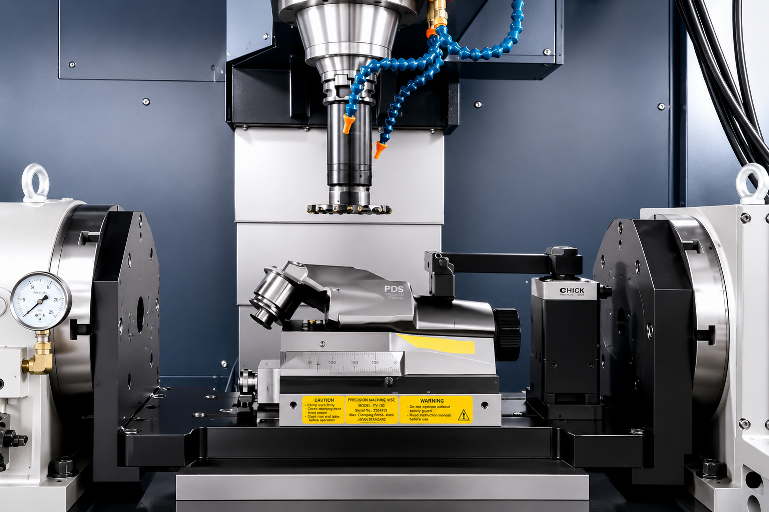
In modern high-precision manufacturing, CNC 4-axis indexing machining has become a key technology for improving the efficiency and accuracy of complex workpiece processing. However, as product structures become increasingly intricate, traditional mechanical fixtures have gradually revealed limitations in clamping efficiency, operational convenience, and machining interference. Against this backdrop, the application of permanent electro-magnetic chucks in CNC 4-axis precision indexing systems has emerged as an innovative solution that combines both efficiency and precision.
First, the most significant feature of a permanent electro-magnetic chuck lies in its design, which integrates permanent magnetism with electrical control switching. By using electric current to control the magnetic circuit, the chuck can rapidly switch between “magnetization” and “demagnetization” states, while maintaining clamping force without continuous power supply. This design not only reduces energy consumption but also prevents the risk of workpiece detachment during power loss, greatly enhancing machining safety. Compared with conventional electromagnetic chucks that require constant power to sustain magnetic force, permanent electro-magnetic chucks are better suited for long-duration machining and applications requiring high stability.
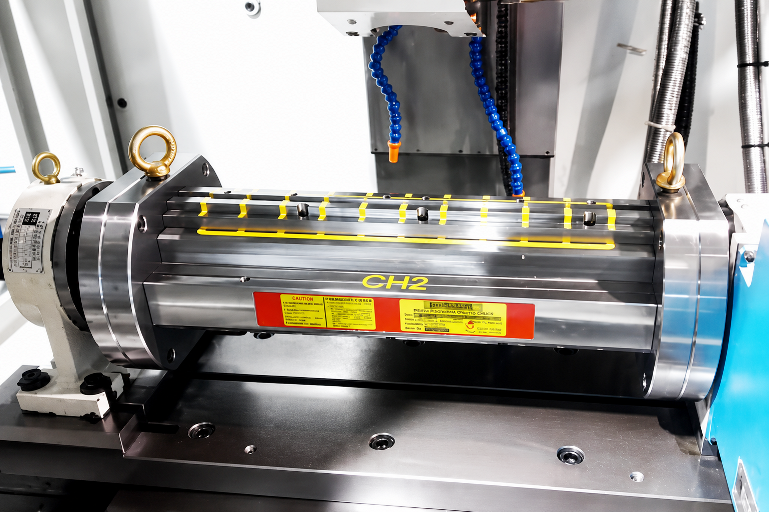
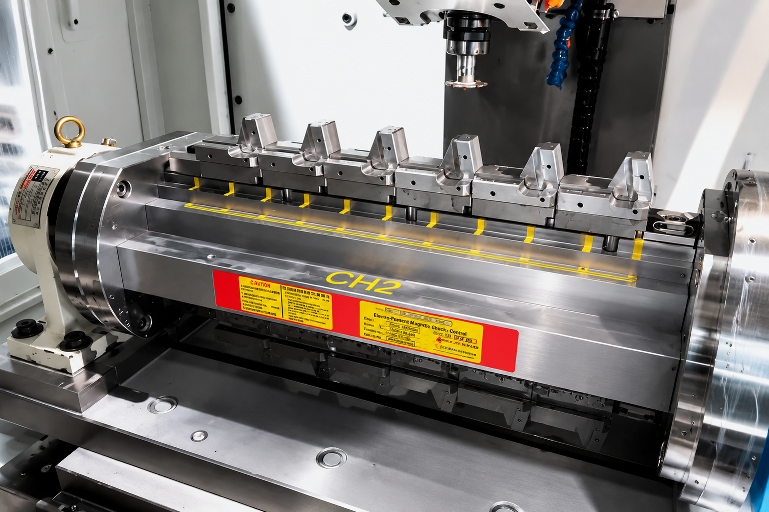
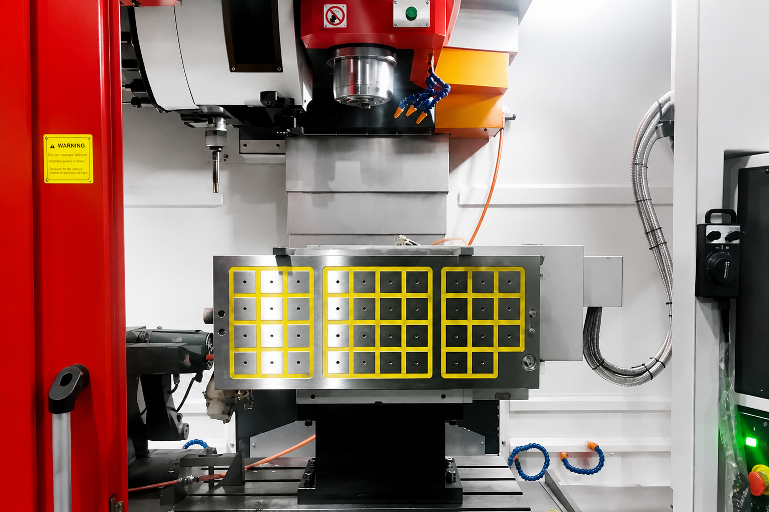
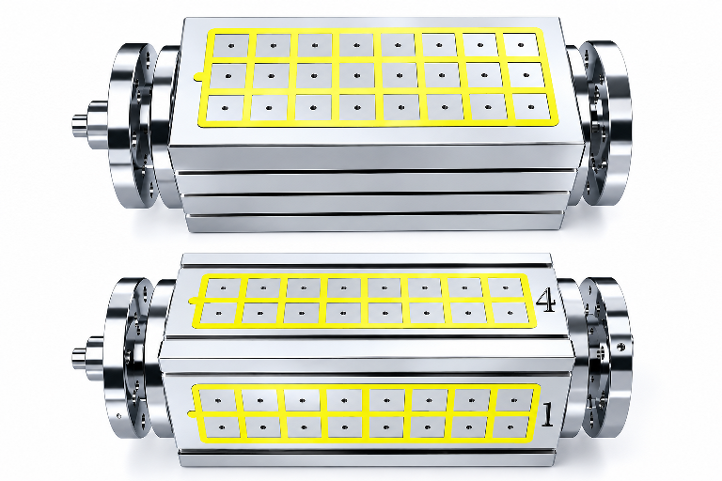
Secondly, the system features “independent magnetization and demagnetization of each magnetic zone,” which is one of its core advantages in 4-axis indexing applications. Through zonal control, each magnetic area can be independently activated or deactivated, allowing operators to load or unload a single workpiece without affecting others that are already clamped. This design is particularly suitable for multi-station machining. For example, in a 4-axis rotary indexing table, each rotation enables machining on different workpieces. When one station completes processing, the operator can demagnetize that specific zone and replace the workpiece, while other stations remain securely clamped and continue machining. This significantly improves overall production efficiency.
Furthermore, permanent electro-magnetic chucks offer extremely fast magnetization and demagnetization, typically completed within approximately 3 seconds. This rapid response greatly reduces workpiece changeover time and minimizes non-productive downtime, which is critical for high-throughput manufacturing processes. In mass production or automated production lines, this time advantage translates directly into higher productivity and reduced waiting time for operators.
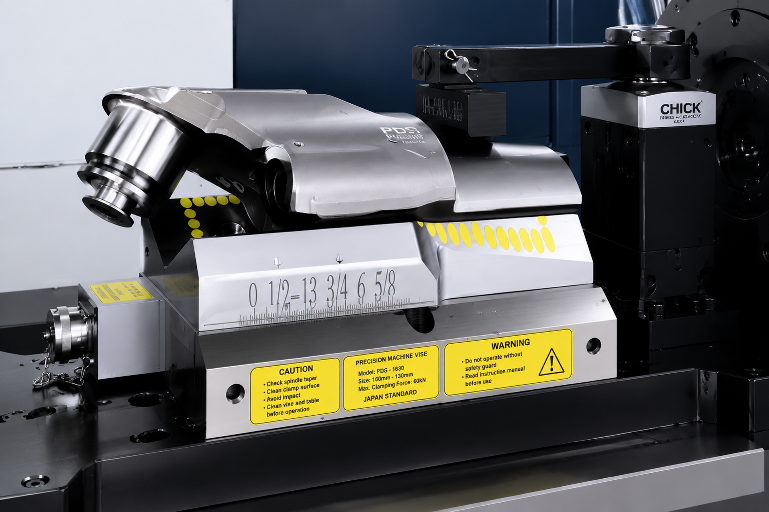
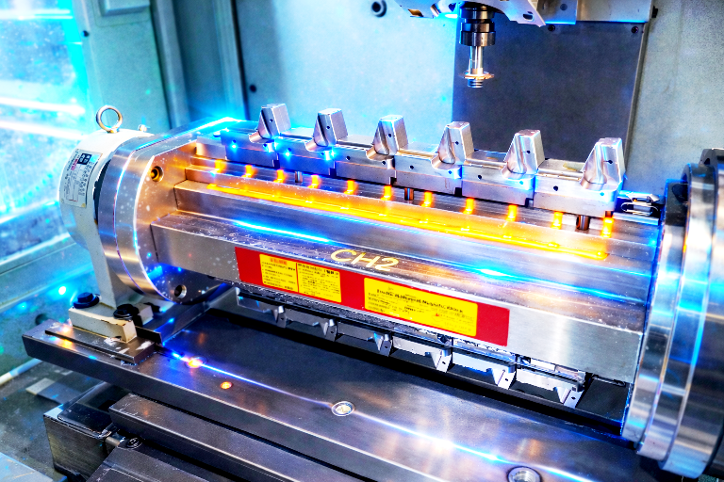
In terms of machining quality, permanent electro-magnetic chucks provide the notable advantage of “obstruction-free machining.” Since magnetic clamping is based on surface contact, there is no need for traditional mechanical fixtures such as vises or clamps. This eliminates fixture interference in the machining area, allowing cutting tools to access the workpiece from multiple angles. It is especially suitable for side machining, inclined surface machining, and complex contour processing, enabling multi-face machining in a single setup. This not only improves machining accuracy by reducing repositioning errors but also simplifies process planning.
Additionally, magnetic clamping provides uniformly distributed holding force, effectively reducing localized stress concentration and minimizing the risk of workpiece deformation. For thin plates, precision components, or easily deformable materials, magnetic chucks offer more stable support, improving surface quality and dimensional accuracy. At the same time, the absence of mechanical clamping pressure eliminates indentation marks, reducing the need for secondary finishing processes.
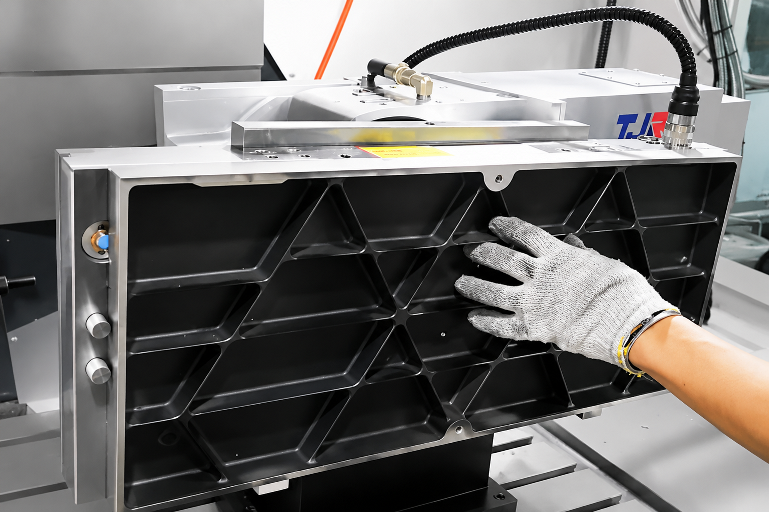
From an operational and maintenance perspective, permanent electro-magnetic chucks feature a relatively simple structure without complex mechanical moving parts, resulting in low failure rates and reduced maintenance costs. The control system can be integrated into the CNC interface for one-button operation and can also be combined with automation equipment, such as robotic arms, to achieve unmanned loading and unloading. Moreover, since continuous power is not required to maintain magnetic force, this technology aligns well with modern manufacturing’s emphasis on energy efficiency and sustainability.
In
summary, the application of permanent electro-magnetic chucks in CNC 4-axis
precision indexing systems not only provides significant advantages in clamping
stability, safety, and machining convenience, but also greatly enhances
productivity and machining quality through features such as zonal magnetization
control, rapid switching (approximately 3 seconds), independent workpiece
handling, and obstruction-free machining. In a manufacturing environment that demands
high precision, high efficiency, and automation, this technology is poised to
become a key development direction in the field of precision machining.