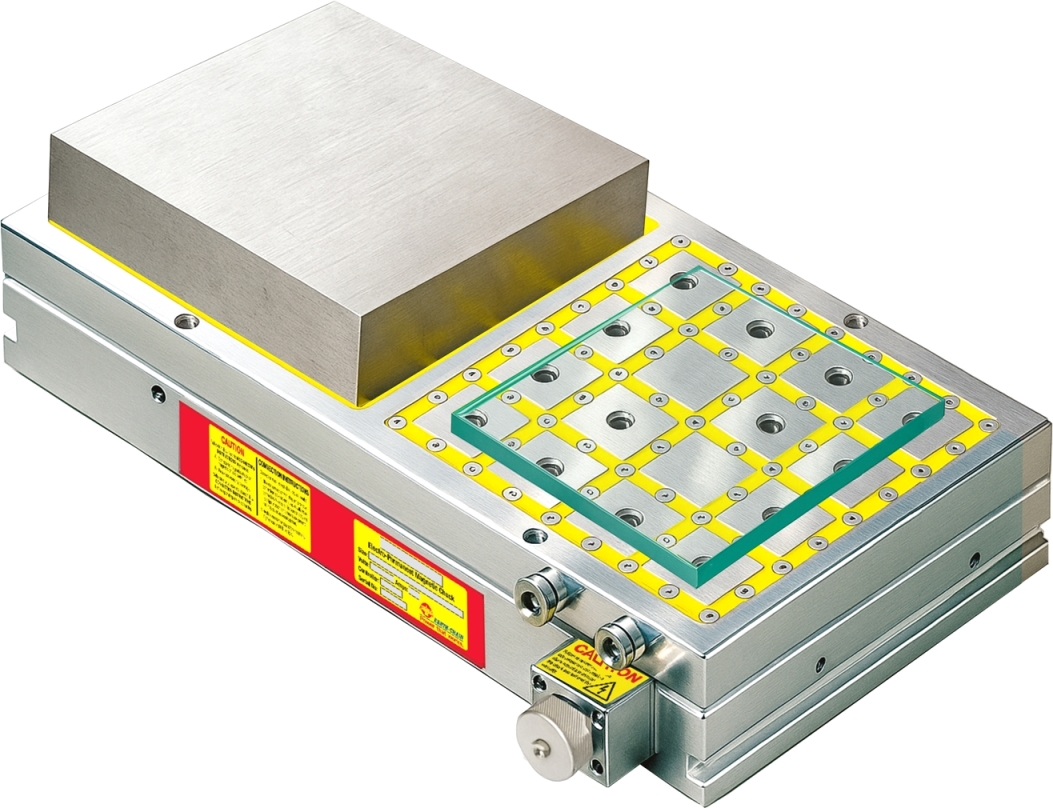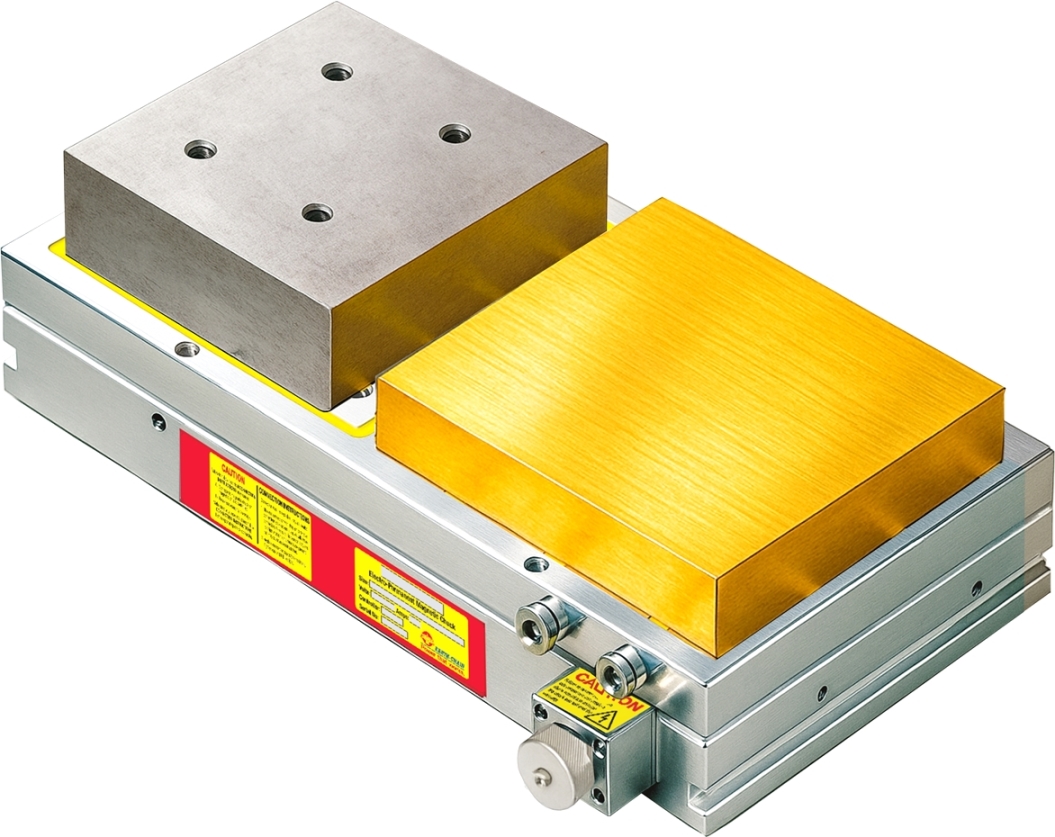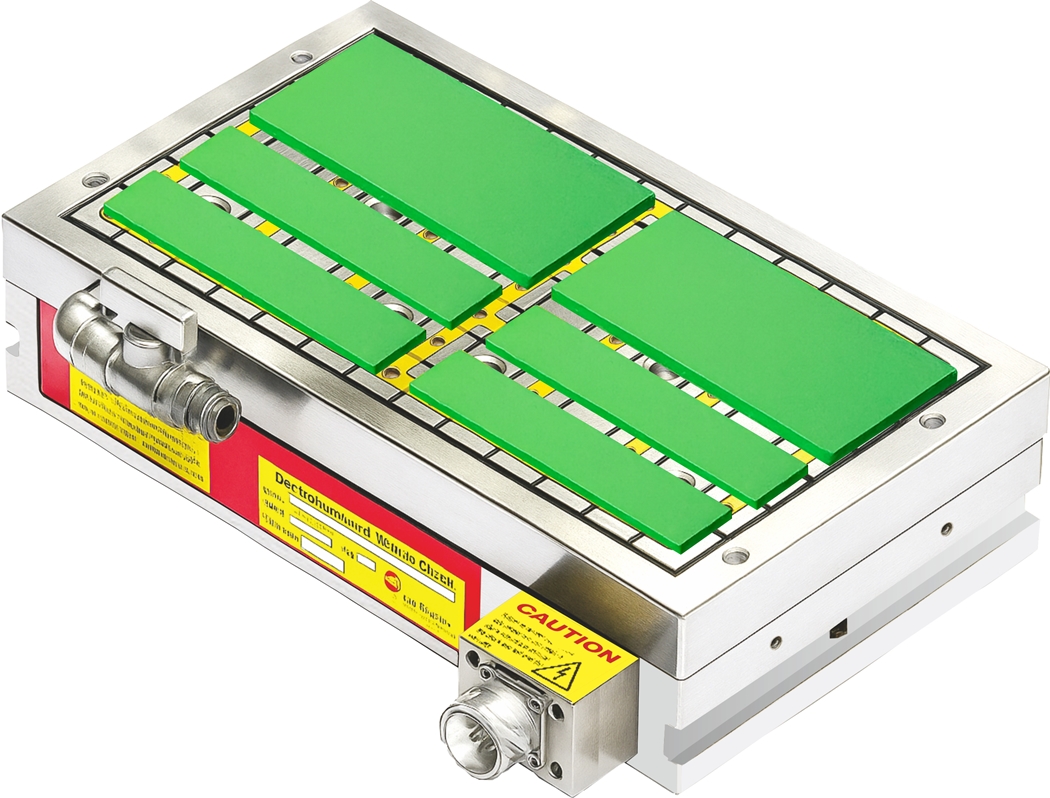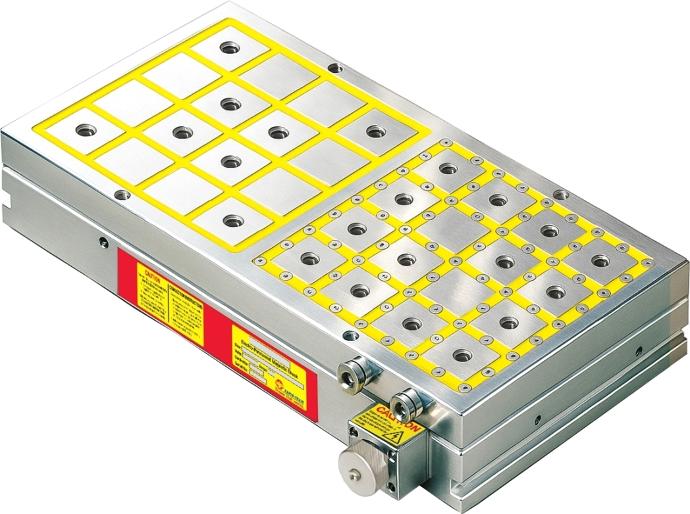
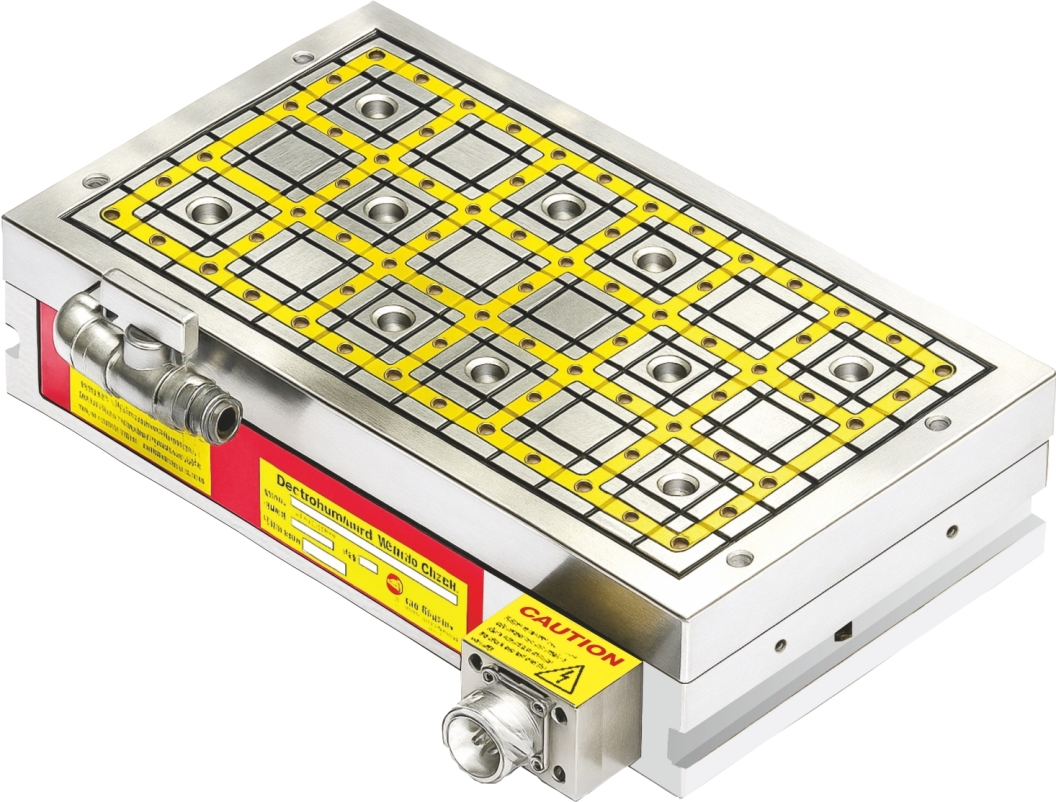
In high-end precision machining and smart manufacturing environments, the stability and flexibility of clamping technology often directly affect machining quality, efficiency, and overall operational costs. Integrating a Vacuum Chuck with an Electro-Permanent Magnetic Chuck represents an innovative solution that breaks through traditional clamping concepts. This technology combines the principles of vacuum adsorption and high-strength magnetic clamping, creating an integrated machining platform capable of handling diverse materials and workpieces, providing modern manufacturing with a more efficient and stable processing foundation.
In terms of material adaptability, this hybrid system demonstrates significant advantages. Traditional magnetic chucks can only clamp ferromagnetic materials such as iron, castings, or low-carbon steel, while vacuum chucks are primarily used for non-magnetic materials such as copper, aluminum, stainless steel, plastics, and composite materials. When both systems are integrated into the same work platform, they can simultaneously meet the machining requirements of both magnetic and non-magnetic workpieces. This allows manufacturers to avoid changing clamping systems due to material differences, greatly reducing changeover time and machine adjustment costs. It is particularly suitable for high-mix, low-volume production or flexible manufacturing environments.
From a technical perspective, this innovation can be regarded as a multifunctional professional integration of a Vacuum Chuck and an Electro-Permanent Magnetic Chuck. The electro-permanent magnetic chuck can switch its magnetic state instantly when energized, and once clamping is completed, it does not require continuous power to maintain strong magnetic holding force. This provides both energy efficiency and operational safety. Meanwhile, the vacuum system generates stable suction through negative pressure, making it especially suitable for thin plates or non-magnetic workpieces. The complementary operation of these two technologies not only enhances clamping stability but also broadens the range of applications. For workpieces requiring five-side machining or complex milling operations, this integrated design effectively reduces vibration and displacement risks, further improving machining accuracy.
In terms of vacuum technology details, the system features an automatic check-valve design, forming a multi-zone single-point negative pressure self-locking clamping structure. When a small leakage occurs in one zone due to workpiece size or surface conditions, the system automatically prevents airflow backflow, ensuring that other zones maintain stable negative pressure. This prevents a single leakage point from affecting the overall clamping performance. Such multi-zone independent control significantly improves the safety and reliability of vacuum clamping, making it particularly suitable for large plates or irregularly shaped workpieces.
In addition, the system incorporates a sealed anti-debris structure with an internal stainless-steel filter mesh to effectively block metal chips, dust, and machining oil residues from entering the vacuum pipelines. This design not only prevents clogging but also extends equipment lifespan and maintenance intervals. Compared with traditional vacuum systems that often suffer from reduced suction due to debris accumulation, this sealed filtration structure greatly improves operational stability and long-term reliability while reducing maintenance costs.
At the system integration level, this hybrid clamping system can be combined with automated air-pressure sensing devices and a vacuum release control system for comprehensive planning and design. Through pressure sensors that monitor negative pressure in real time, the clamping status can be fed back to the CNC controller or automated production line, ensuring that safe clamping standards are achieved before each machining operation. After machining is completed, the workpiece can be quickly released through a vacuum-breaking mechanism, improving changeover efficiency and reducing manual handling time. This integrated design aligns with the principles of smart manufacturing and facilitates the implementation of unmanned or semi-automated production processes.
From an overall application perspective, the integration of a Vacuum Chuck with an Electro-Permanent Magnetic Chuck is not merely an equipment upgrade but also an innovation in machining philosophy. It breaks the limitations of single clamping methods, enabling one platform to handle ferromagnetic materials such as iron and castings as well as non-magnetic materials such as copper, stainless steel, and plastics. For gantry milling machines, vertical machining centers, or large surface machining equipment, this system can significantly enhance machining efficiency and clamping stability while reducing positioning errors and clamping deformation risks.
Overall,
this innovative integrated technology offers multiple advantages, including
wide material compatibility, energy efficiency and safety, highly stable
negative-pressure control, durable anti-debris design, and strong automation
integration capabilities. It not only meets the modern manufacturing industry's
core demands for high efficiency, high precision, and low cost, but also lays
an important foundation for future multifunctional smart machining platforms.
Through the deep integration of vacuum and electro-permanent magnetic
technologies, manufacturers can perform cross-material machining tasks within a
single system, truly achieving the goals of flexible manufacturing and
high-efficiency production.