In the development trend of modern precision machining and smart manufacturing, production efficiency, machining accuracy, and process flexibility have become key indicators of competitiveness for manufacturing enterprises. With the growing demand for diversified products and the widespread adoption of high-mix, low-volume production models, traditional clamping methods that rely on manual alignment and repeated adjustments are gradually becoming insufficient to meet the requirements of both high efficiency and high precision. Against this background, the integration of Zero Point Workholding and magnetic quick mold change systems has gradually become an important solution in advanced manufacturing equipment. Through structural and functional integration, these two technologies not only improve mold change efficiency but also significantly enhance positioning accuracy and machining stability, providing a more efficient and flexible workholding solution for modern manufacturing environments.
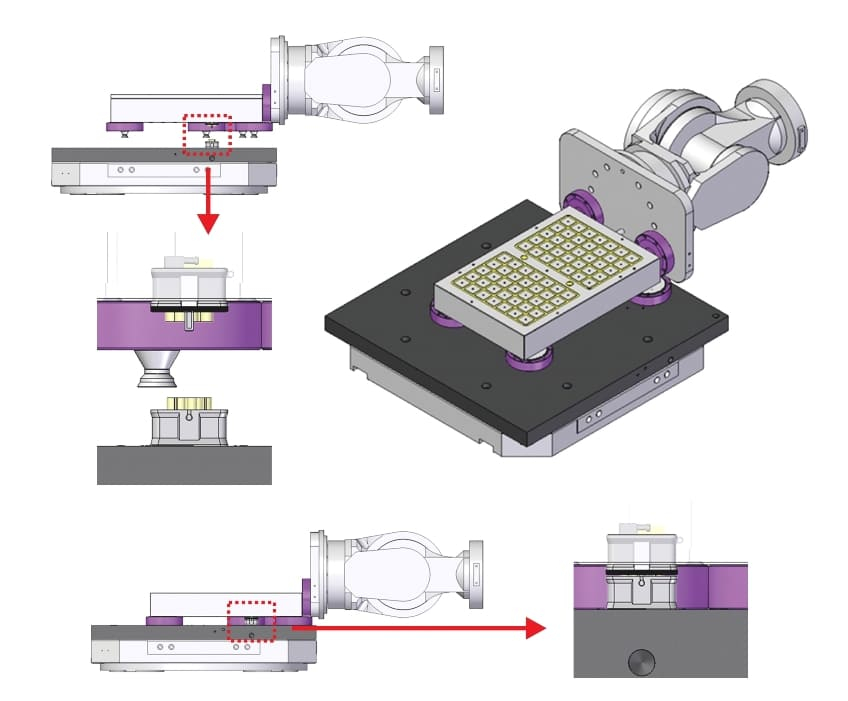
The core concept of a zero-point positioning system is to establish a fixed and highly precise reference point, enabling fixtures, molds, or workpieces to return to the exact same position every time they are installed. Through the design of high-precision locating pins and locking mechanisms, the Zero Point Workholding can achieve micron-level repeatability. When machining fixtures or molds are transferred between different machines, or when they are replaced on the same machine, they only need to be placed on the zero-point reference position and locked in place before machining can begin immediately, without the need for complex tool setting or alignment procedures. This highly standardized positioning method greatly reduces machine downtime and significantly improves the effective utilization rate of equipment.
On the other hand, the magnetic quick mold change system uses electronically controlled magnetic force as its primary clamping principle. The powerful magnetic force generated by the electro-permanent magnetic chuck can rapidly attract and secure molds or ferromagnetic workpieces, allowing clamping or release operations to be completed within a very short time. Compared with traditional mechanical locking or bolt-fastening methods, magnetic clamping is not only easier to operate but also creates a uniform holding force across the entire contact surface, preventing deformation or stress concentration caused by localized clamping. In addition, the application of electro-permanent magnetic technology allows the magnetic chuck to maintain its magnetic force without continuous power supply after activation, which not only saves energy but also enhances machining safety and reliability.
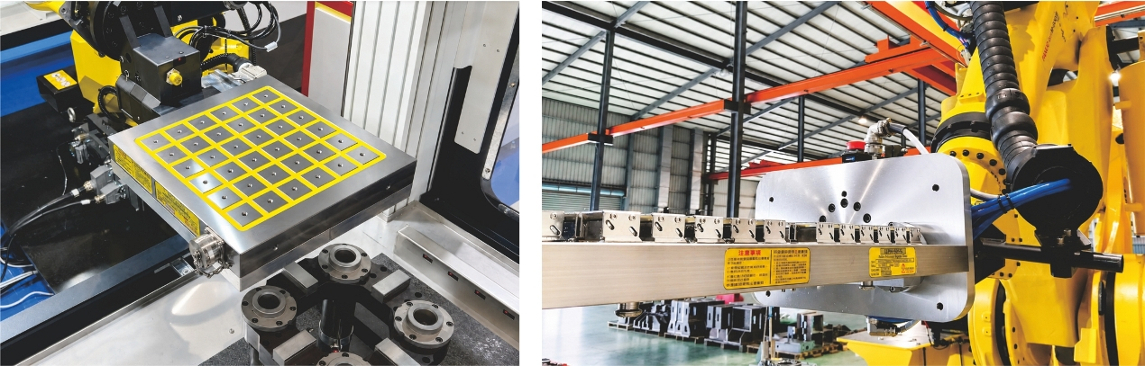
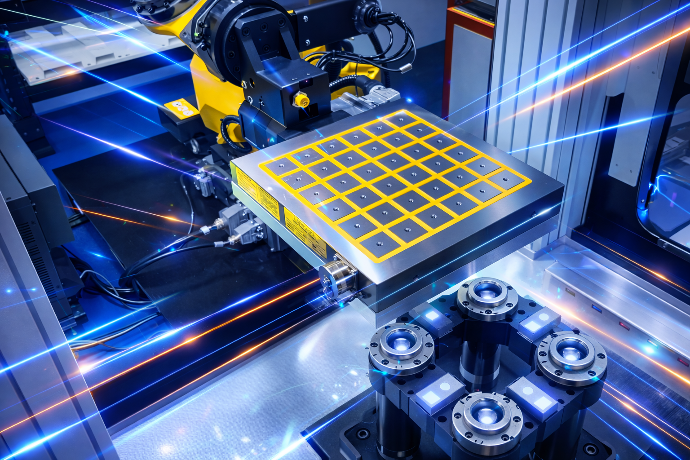
When the Zero Point Workholding is integrated with the magnetic quick mold change system, the advantages of both technologies complement each other to form a highly efficient and precise workholding platform. The Zero Point Workholding provides accurate and stable positioning references, while the magnetic system delivers fast and evenly distributed clamping force. When replacing molds or workpieces, operators only need to place the fixture on the zero-point positioning module to ensure accurate positioning, and then activate the magnetic chuck to complete the clamping process. The machining operation can then begin immediately. This process significantly shortens mold change time while also reducing the possibility of human operational errors.
In terms of production efficiency, this integrated system can significantly reduce machine non-cutting time. In traditional machining processes, mold replacement often requires multiple adjustments and calibrations, sometimes involving repeated verification using measuring instruments. With the combination of zero-point positioning and magnetic quick mold change systems, molds or fixtures can be replaced within a very short period, allowing machines to return to production much faster. This capability is particularly important for high-mix, low-volume manufacturing environments where production lines must frequently switch between different product setups.
Regarding machining accuracy, the Zero Point Workholding provides stable repeatable positioning, ensuring that each clamping operation maintains the same reference position and preventing the accumulation of errors caused by repeated recalibration. Meanwhile, the uniform magnetic holding force ensures that the workpiece remains stable during machining, reducing the likelihood of vibration or displacement. This is especially important for high-speed or high-precision machining, as clamping stability directly affects tool life and machining quality.
Furthermore, in applications involving automation and smart manufacturing, the integration of zero-point positioning and magnetic systems offers a high degree of compatibility. Because Zero Point Workholdings feature standardized interfaces, robotic arms or automated mold-changing devices can easily perform fixture handling and installation. Meanwhile, the electronically controlled characteristics of magnetic systems enable integration with machine control systems or production management systems, making the mold change process more automated and intelligent. For example, in unmanned machining environments, robotic systems can automatically replace fixtures and activate the magnetic chuck, enabling the entire process to proceed with minimal human intervention and further improving production efficiency and operational stability.
From the perspective of equipment safety and maintenance, this integrated system also offers significant advantages. Traditional bolt-fastening methods can become loose over time due to vibration, increasing the risk of equipment failure or workpiece detachment. In contrast, magnetic systems maintain holding force without continuous power supply after magnetization, ensuring clamping security even in the event of unexpected power outages. At the same time, the relatively simple structure of zero-point positioning modules results in lower daily maintenance costs, helping improve the long-term reliability of equipment.
In summary, the integration of Zero Point Workholdings and magnetic quick mold change systems not only transforms the traditional methods of mold and workpiece clamping but also provides a more efficient, precise, and flexible machining solution for modern manufacturing. By combining accurate positioning with rapid clamping capabilities, enterprises can effectively shorten mold change time, improve machining quality, and reduce production costs. At the same time, this technology lays an important foundation for future smart factories and automated production lines, enabling manufacturing processes to become more standardized and efficient.
As
precision machining technology and smart manufacturing continue to evolve, the
requirements for workholding systems will no longer focus on a single function
but will increasingly emphasize overall integration and system-level
applications. The integration of zero-point positioning and magnetic quick mold
change systems represents a key manifestation of this trend. In the future,
with the introduction of more advanced materials, control systems, and
automation technologies, such hybrid workholding systems will play an even
greater role in industries such as aerospace, automotive manufacturing, mold
processing, and high-end equipment manufacturing, becoming one of the
indispensable key technologies of the smart manufacturing era.