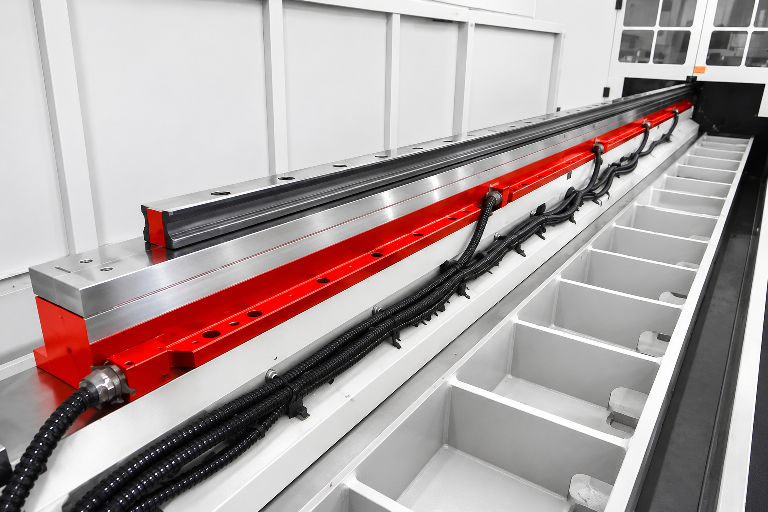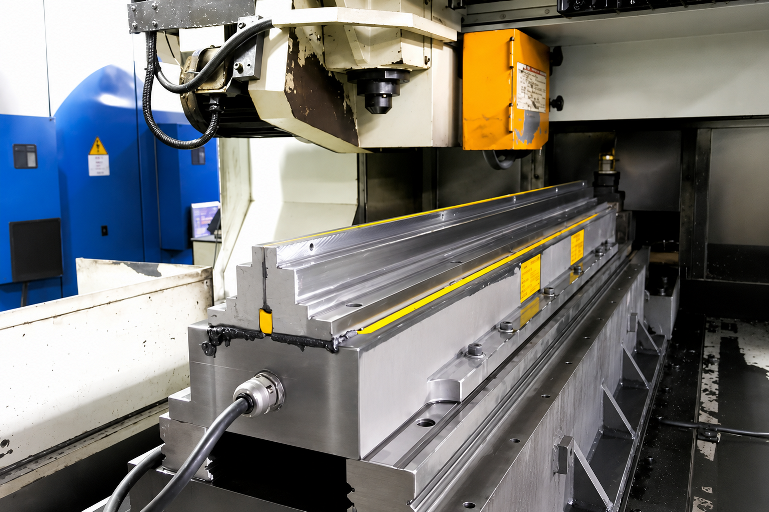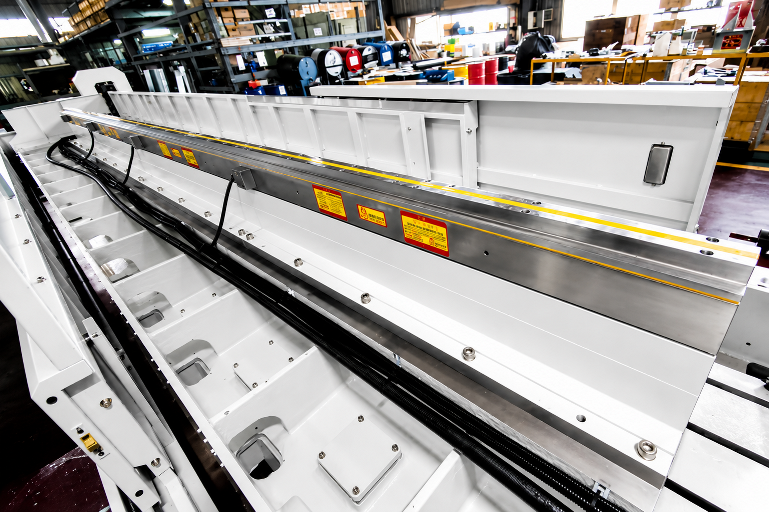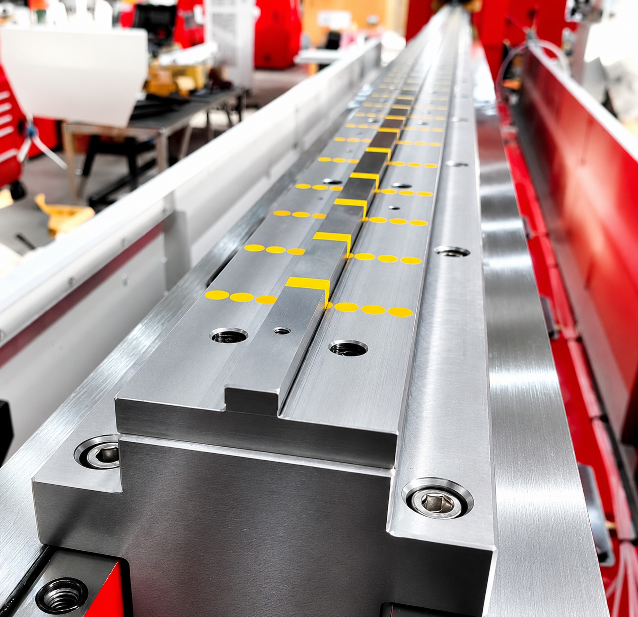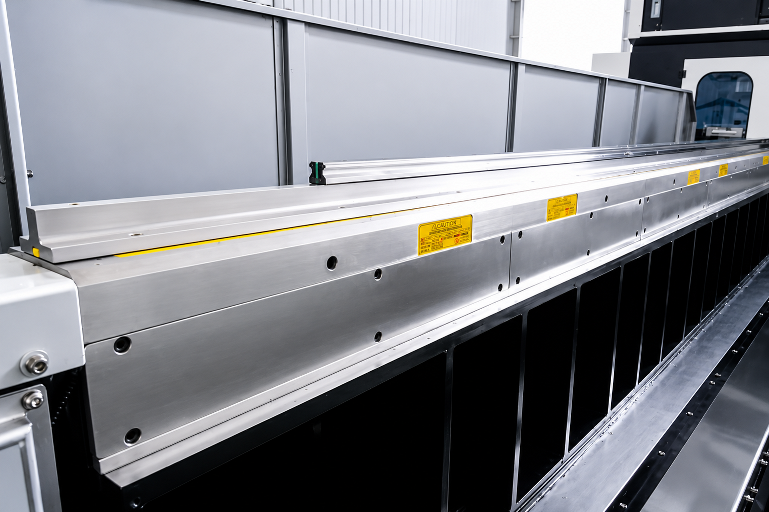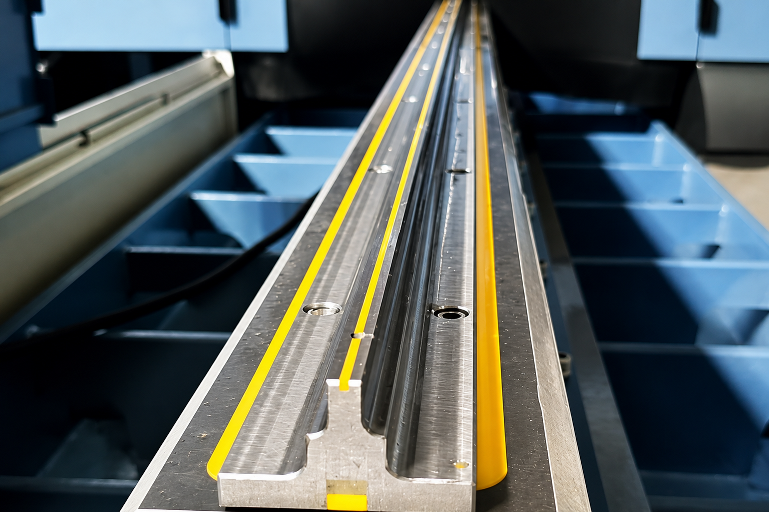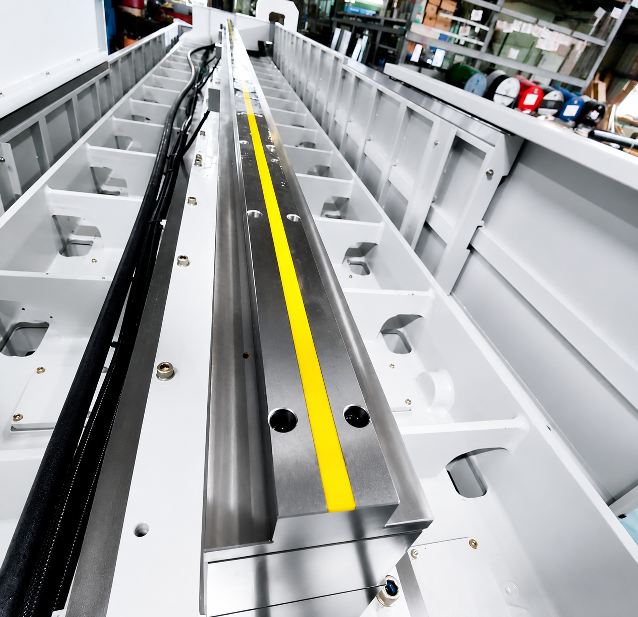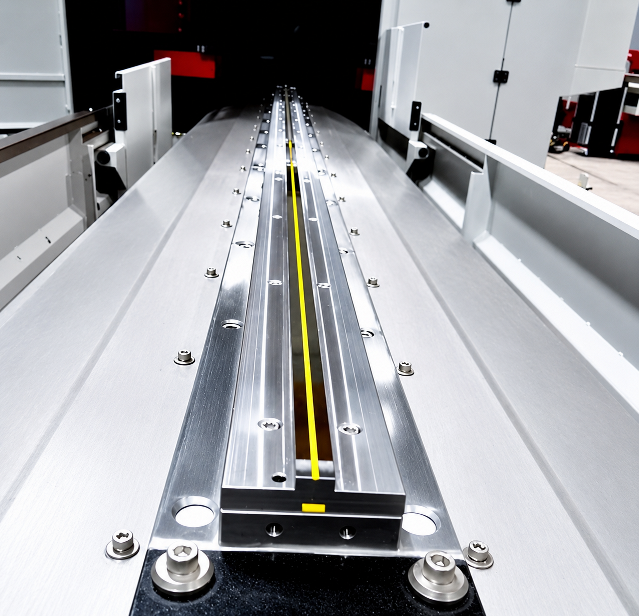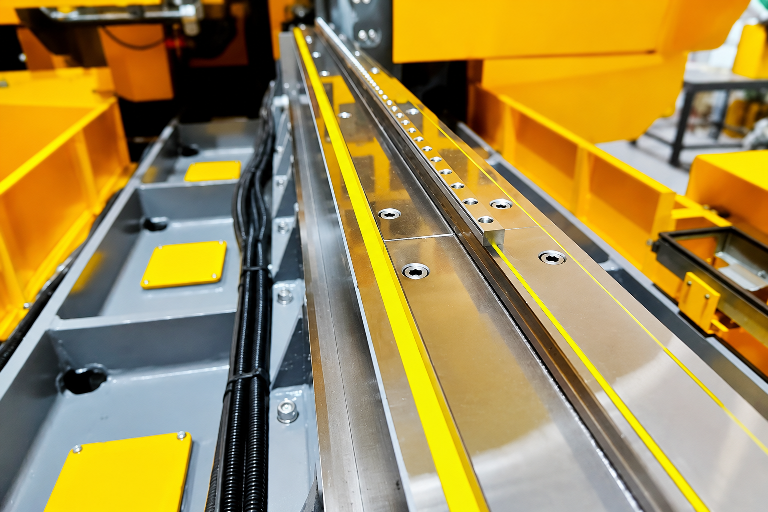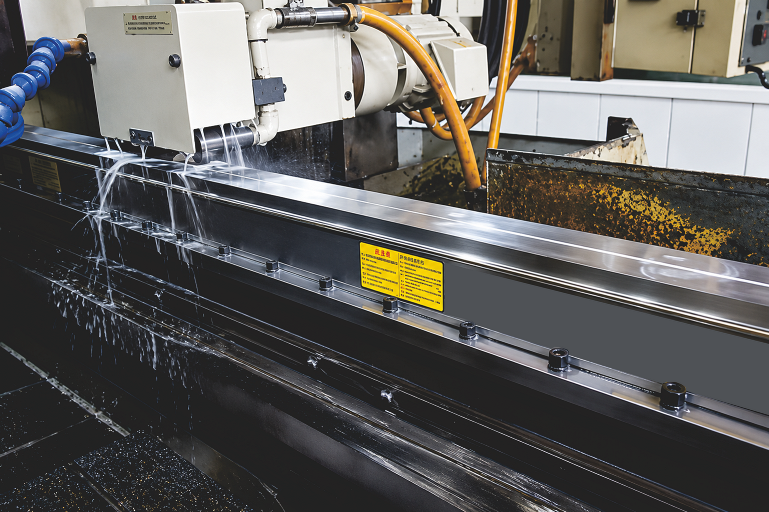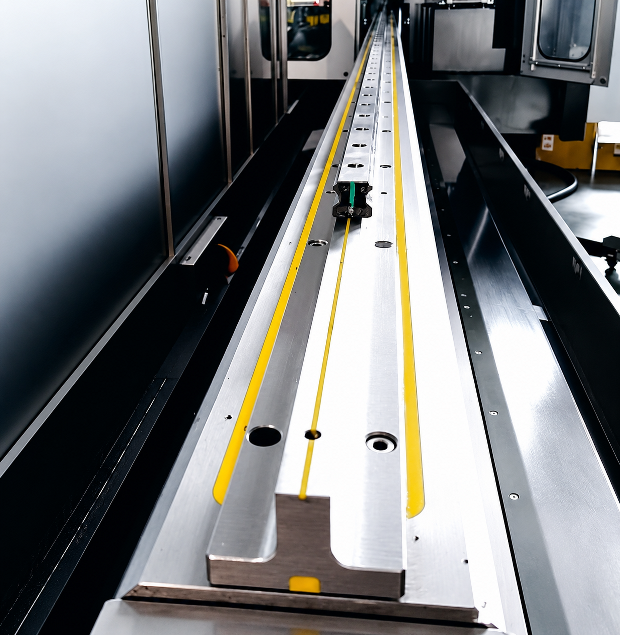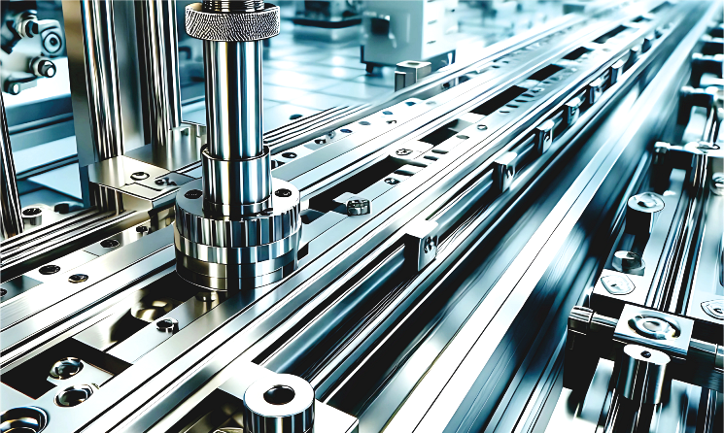
In modern precision machinery manufacturing, the **linear guideway** serves as a key component for high-accuracy motion control. Its geometric precision and surface quality directly affect the positioning accuracy and overall stability of the equipment. To ensure extremely high levels of flatness, straightness, and surface roughness control, **grinding** is adopted as the final and most critical process. During this process, the **workpiece clamping method** plays a decisive role in determining machining accuracy.
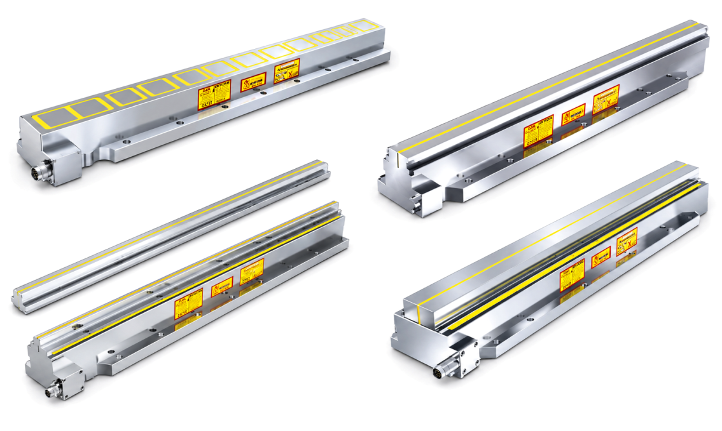
Electro Permanent Magnetic chuck
In
recent years, the **Electro-Permanent Magnetic chuck (EEPM chuck)** has
gradually replaced traditional electromagnetic chucks and mechanical fixtures
due to its stability, controllability, and energy-saving characteristics. It
has become an essential technology for improving the precision of linear
guideway grindin.
1. Working Principle of the Electro-Permanent Magnetic Chuck
The electro-permanent magnetic chuck combines the advantages of **stable permanent magnetism** and **convenient electromagnetic control**. Magnetization or demagnetization is completed within 1–3 seconds, and no continuous power supply is required during operation.
Since it produces **no temperature rise**, the chuck can be used for long periods without heat-induced deformation of the workpiece, thus maintaining high accuracy. This design eliminates the need for continuous energization—common in traditional electromagnetic chucks—while improving both safety and energy efficiency.
2. Stable Magnetic Force Improves Machining Accuracy
During linear guideway grinding, the workpiece is typically **long and thin**, making it prone to slight deformation under force. Traditional mechanical clamping can cause localized stress concentration, leading to warping or micro-deformation that limits achievable flatness.
Although conventional electromagnetic chucks can provide uniform suction, prolonged energization leads to surface heating, which affects suction stability and causes thermal deformation.
The **electro-permanent magnetic chuck**, on the other hand, provides **uniform and stable magnetic holding** across the entire workpiece surface. This eliminates stress differences caused by clamping points and prevents deformation from suction fluctuation or thermal changes.
Because of its evenly distributed magnetic field, the guideway remains flat and stable throughout the grinding process. As a result, surface flatness can be controlled within a few micrometers, significantly enhancing the geometric accuracy of the guideway surface.
3. Low Thermal Deformation Ensures a Stable Processing Environment
In precision grinding, **thermal stability** is one of the most critical factors affecting accuracy.
Traditional electromagnetic chucks require continuous current to maintain magnetic force, and the energized coils generate Joule heat. This raises the chuck’s surface temperature, causing thermal expansion of both the chuck and the workpiece. Even minor variations can accumulate over long grinding paths, ultimately degrading straightness and parallelism.
The electro-permanent magnetic chuck operates in a **“energize-to-switch, power-off-to-hold”** mode, requiring only 1–3 seconds of current for magnetization or demagnetization. No continuous power is needed, and **almost no heat is generated**.
Therefore, the chuck surface maintains excellent temperature stability throughout the grinding process, effectively preventing thermal drift. This stable thermal environment keeps the relative positions of the spindle, grinding wheel, and workpiece consistent, ensuring long-term precision and repeatability.
4. Rapid Switching and Efficient Clamping Enhance Productivity
Beyond precision improvement, the electro-permanent magnetic chuck also offers **significant operational efficiency**.
Magnetic switching takes only a fraction of a second, allowing **fast, simple, and reliable** workpiece setup. This greatly shortens loading and unloading time compared with mechanical fixtures or conventional electromagnetic systems that require suction stabilization.
Because no continuous energization is needed, the system saves energy, reduces maintenance costs, and improves overall productivity. These advantages are particularly valuable for **automated grinding lines** handling large or batch-produced linear guideways requiring continuous high-precision processing.
5. Enhanced Safety and Reliability
In terms of safety, the electro-permanent magnetic chuck has **distinct advantages** over traditional systems.
Once magnetized, the chuck **retains full magnetic force even during power failure**, preventing the workpiece from loosening or sliding. In contrast, traditional electromagnetic chucks lose all holding force immediately upon power loss, posing serious risks to both equipment and operators.
Furthermore, the internal magnets of the EPM chuck feature **demagnetization-resistant and heat-insulating designs**, ensuring long-term stability and durability.
Its optimized magnetic circuit design minimizes magnetic leakage and local weakening, providing consistent suction force over extended operation and thereby guaranteeing stable grinding precision.
6. Comprehensive Benefits and Future Outlook
In summary, the **electro-permanent magnetic chuck** not only enhances clamping stability and machining accuracy but also provides **energy efficiency, operational safety, and productivity gains**.
Its **uniform magnetic field** ensures flat positioning during grinding, its **low thermal deformation** maintains high dimensional stability, and its **fast control and secure holding** capabilities support automated and reliable production lines.
As the precision requirements of high-end
machinery and semiconductor equipment continue to rise, electro-permanent
magnetic chucks are expected to see **wider adoption** in advanced precision
machining applications. They will play a crucial role as a **core enabling
technology** for intelligent manufacturing and ultra-precision processing in
the years to come.