Magnets are generally classified into permanent magnets and non-permanent magnets. Although both types exhibit magnetic properties and can attract ferrous materials, there are distinct differences in their advantages and characteristics.
Magnets made from materials such as Neodymium (NdFeB), Samarium Cobalt (SmCo), and Ferrite are classified as permanent magnets, whereas electromagnets are typically considered non-permanent magnets.
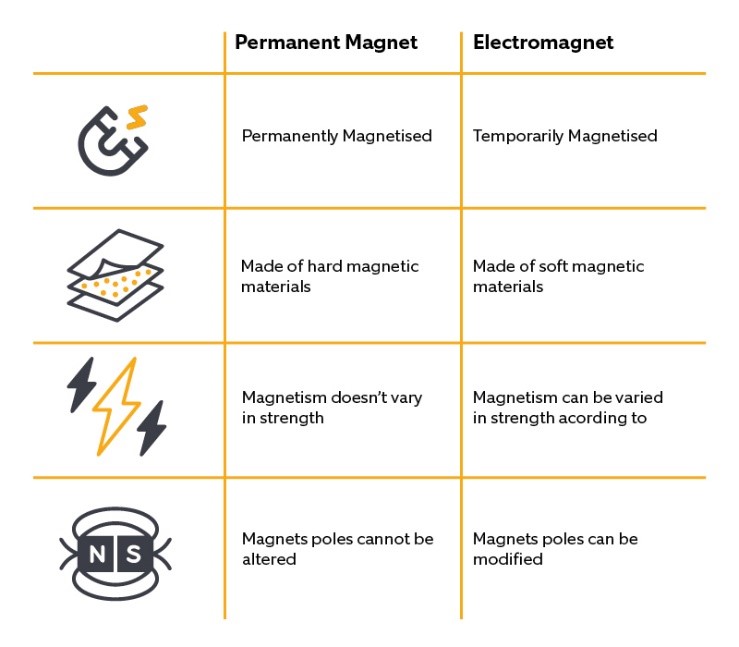
Permanent Magnets are solid materials that generate a stable magnetic field due to the inherent magnetic properties of the material itself. Unlike permanent magnets, the magnetic field of an electromagnet is generated by the flow of electric current; when the current is turned off, the magnetic field disappears.
Electromagnets are usually composed of multiple coils of copper wire, forming a solenoid. When an electric current passes through the solenoid's coils, it generates a magnetic field. If an iron core is inserted into the solenoid, the core becomes magnetized and exhibits magnetic properties. However, it loses its magnetism as soon as the current stops flowing.
Both permanent magnets and electromagnets have north and south poles, and their magnetic fields interact with other magnetic sources and materials with magnetic properties.
Here’s a summary of the similarities and differences between permanent magnets and electromagnets:
Similarities:
Both have north and south poles.
Both can attract ferrous materials and interact with other magnetic fields.
Differences:
Permanent Magnets:
- Generate a stable magnetic field without the need for an external power source.
- Made from materials like NdFeB, SmCo, and Ferrite.
Electromagnets:
- Generate a magnetic field only when an electric current flows through them.
- Composed of coiled copper wire (solenoid) and often enhanced with an iron core.